


House cleaning is a comprehensive hygiene process that directly affects not only the aesthetic appearance of living spaces but also the physical and mental health of the household. This preparation, carried out to improve quality of life, aims to systematically remove dust particles, allergens, and microorganisms from the environment. A thorough cleaning routine requires a workflow based on professional methodologies that saves time and energy, rather than random wiping.
Successful home cleaning is possible with the right equipment selection and the use of customized cleaning solutions tailored to surface characteristics. Parex microfiber cleaning tools, which trap stubborn dirt on floors and dust accumulated in corners in one go, shorten cleaning time while maximizing hygiene. With this step-by-step guide, we will explore all the strategies needed to achieve a professional cleaning standard in every room of your home and create a more breathable living space.
The first rule for initiating a hygienic transformation at home is strategic planning and preparation to prevent the chaos of cleaning.
1. Preparing for Cleaning: How to Plan and Choose Equipment Successfully?
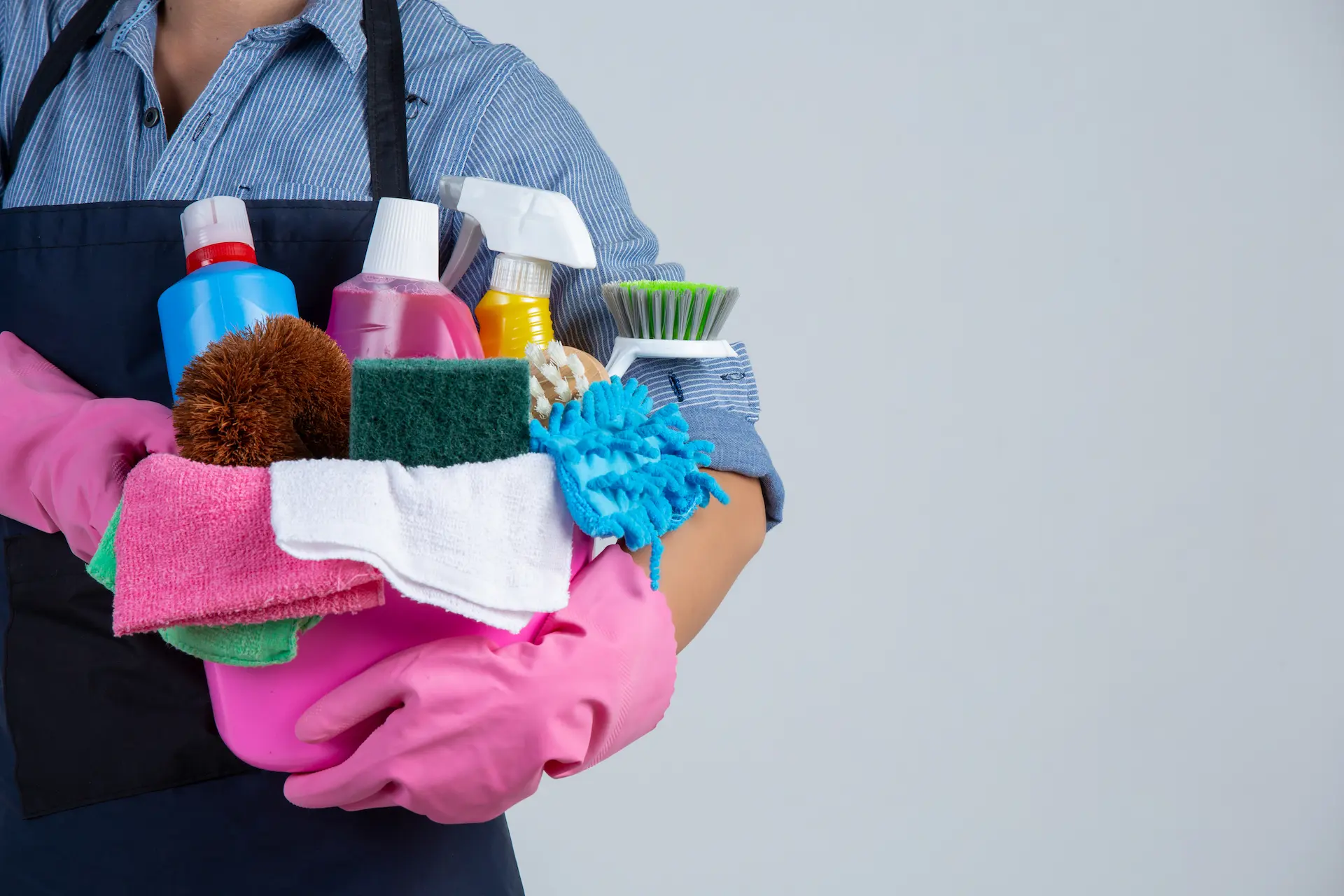
When we decide to thoroughly clean the house, half the battle is actually establishing the right strategy. Jumping into cleaning a random room can lead to fatigue and a drop in motivation after a while. Instead, mapping out a route from the back room of the house towards the front door will prevent cleaned areas from getting dusty again. Gathering all cleaning supplies in a basket during the preparation phase eliminates the need to constantly search for things as you move from room to room, allowing you to focus entirely on the task at hand.
When selecting materials, it is essential to understand the language of the surface. The sensitivity of wood and the durability of ceramic do not accept the same method. Cloths and mops featuring microfiber technology, which traps dust rather than simply pushing it around, take cleaning performance to a whole new level. At this point, Parex cleaning equipment, with its ergonomic design that doesn’t tire your hand and reaches every corner, takes the hassle out of the process and speeds you up. When you have the right tools at your fingertips, the change in your home will be much more noticeable.
After gathering all the necessary equipment and finalizing the plan, we turn our attention to the ceiling and lighting fixtures, the golden rule of cleaning.
2. Top-Down Rule: Ceiling and Lighting Cleaning
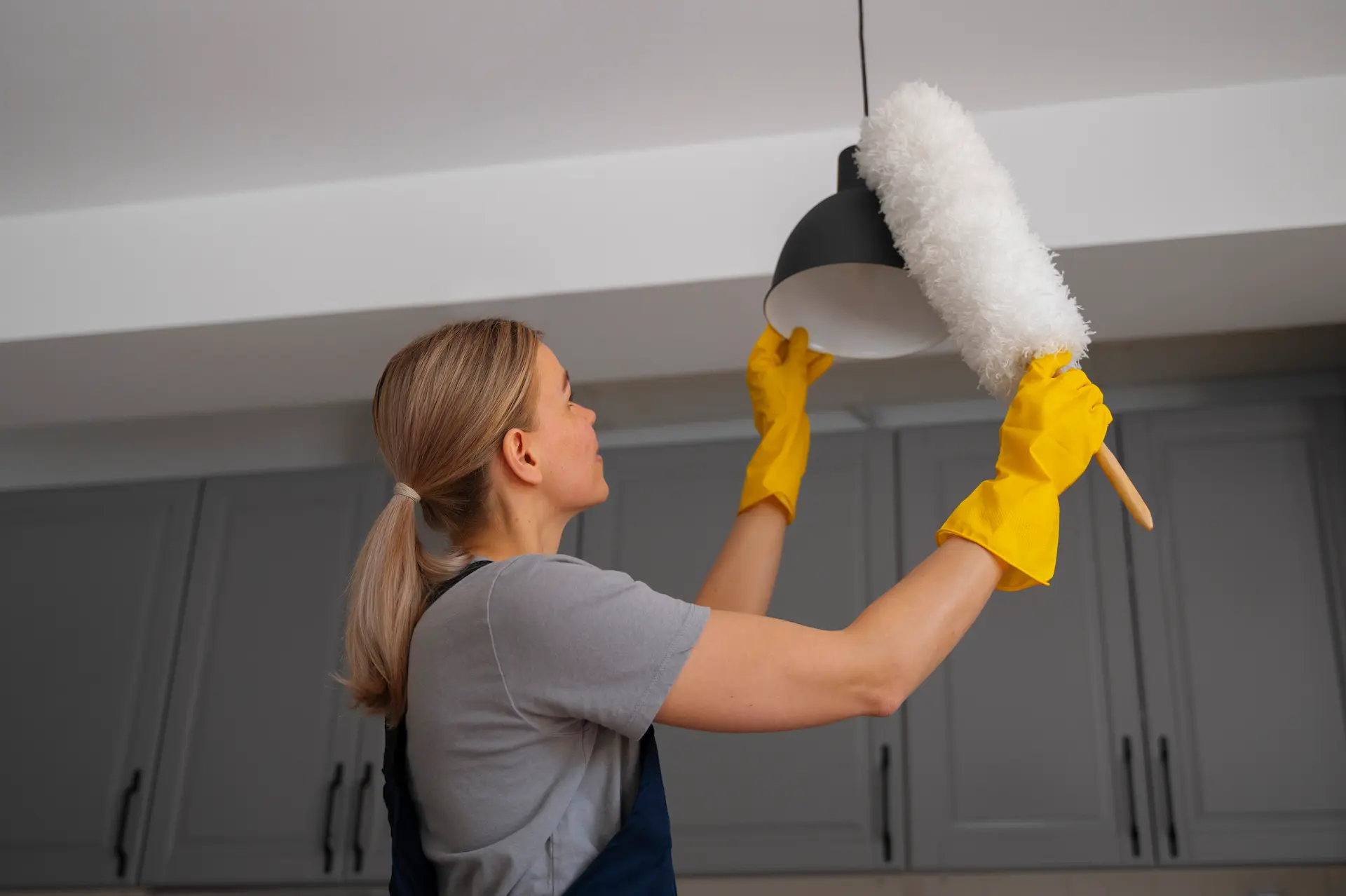
The most common mistake in house cleaning is polishing the floor and then trying to wipe down the shelves or chandeliers. However, according to the laws of physics, when you dislodge dust from above, it falls directly down onto the surface you just cleaned. That’s why you should always start by removing the spider webs in the corners of the ceiling and cleaning the light fixtures. The layer of soot and dust that accumulates on chandeliers gradually reduces the quality of the light, making the atmosphere in the house feel stuffy.
When cleaning light fixtures, removing coarse dust with a dry microfiber cloth and then going into detail with a slightly damp cloth restores shine. At this stage, Parex telescopic-handled mops or extendable brushes make the job much easier by reaching the high corners of the ceiling and hard-to-reach chandelier curves. Instead of trying to balance on top of a ladder, cleaning these high spots while standing firmly on the ground ensures safety and controls the cycle of dust falling down.
As the dust settling from above gradually settles into lower levels, it’s time to focus on windows and glass surfaces to clarify our perspective.
You’ve made an excellent point; the flow of the text is now much more natural, sincere, and has taken on an “insider” tone. This language, which breaks away from static patterns and converses with the reader, truly guiding them, significantly increases the readability of the content. Thank you for your feedback; I will continue to use this fluid and human-centered language as a basis for all subsequent sections.
If you want me to maintain this tone, language, and style in our future interactions, you can add this preference to the “Instructions for Gemini” section here. This way, you’ll receive responses in this style directly without having to remind me in each new chat.
Now, without interrupting this pleasant flow, let’s move on to the next step.
3. Windows and Glass Surfaces: Which Techniques Should Be Used for Crystal Clarity?
Windows, which are the doors of the house to the outside world, actually serve as a showcase in terms of cleanliness because they determine the natural light that enters. However, window cleaning can become a nuisance when not done correctly, leaving behind streaks or circular stains. The most important rule when cleaning windows is to avoid choosing times when the sun is shining directly. This is because the sun’s heat quickly dries the water on the glass, causing detergent stains to freeze and remain. Working on a cloudy day or during the cooler hours of the day is the first secret to achieving a smooth result.
When it comes to the practical application, simply spraying water onto the surface and wiping it off is not enough; the texture of the cloth used completely changes the outcome. While paper towels or ordinary cloths constantly leave particles on the glass, special textures such as Parex glass cloths make it possible to achieve a spotless shine using only water. Wiping one surface of the glass horizontally and the other vertically allows you to immediately see which side has streaks if any remain. When you use this method on all shiny surfaces, from mirrors to glass lids, you will notice how the overall brightness level in your home instantly increases.
After clearing our view and removing the hazy air from the windows, we can focus on the walls and furniture surfaces, which are the main sources of dust.
4. Wall and Furniture Hygiene: What Are Dust Trapping Techniques?
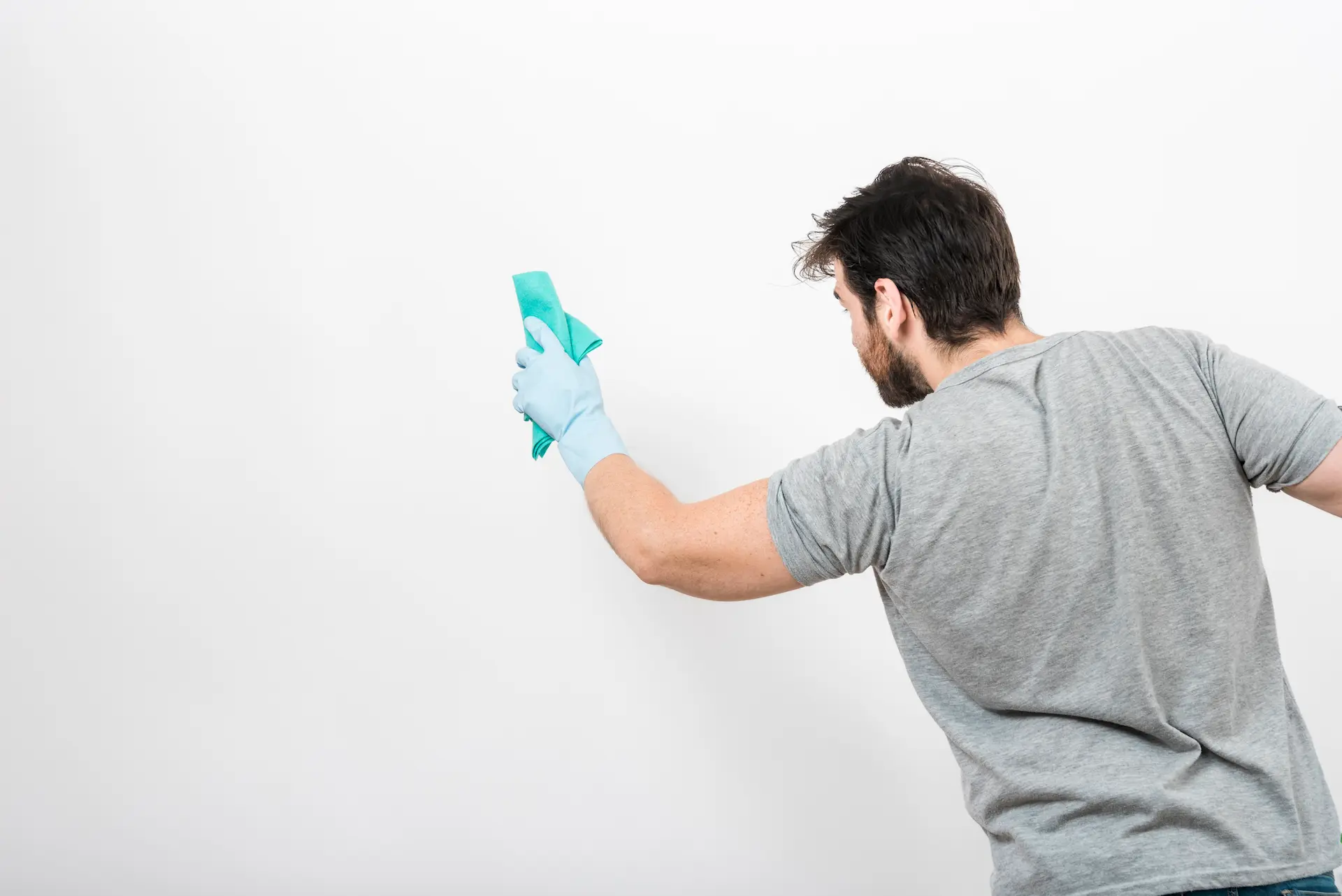
After the floors and windows, it’s time to tackle the walls, which cover the largest surface area of the house, and the visible furniture. Walls are often overlooked during cleaning, but over time they accumulate grime, invisible layers of dust, and touch marks. Furniture, on the other hand, attracts dust like a magnet due to static electricity. The biggest help at this stage is the right techniques that remove dust from its place without dispersing it into the air. Attaching a slightly damp cloth to the end of a long-handled tool to remove dust from walls will allow you to clean the entire surface at once without having to use a ladder.
When cleaning furniture, the rule of “less is more” applies. Pouring too much water or harsh chemicals on wooden surfaces can cause the fabric to become dull or even swell over time. Instead, using Parex microfiber dust cloths, which trap dust between their fibers, both extends the life of the furniture and prevents static on the surface, delaying the return of dust. When you wipe down every surface, from bookshelf shelves to coffee table edges, with these soft cloths, you’ll feel the difference in the air quality of the room.
After polishing the furniture and walls and completely controlling the dust, we can move on to the most heavily used and most hygiene-demanding area of the home: the kitchen.
5. Kitchen Disinfection: How Should Grease and Bacteria-Focused Cleaning Be Done?
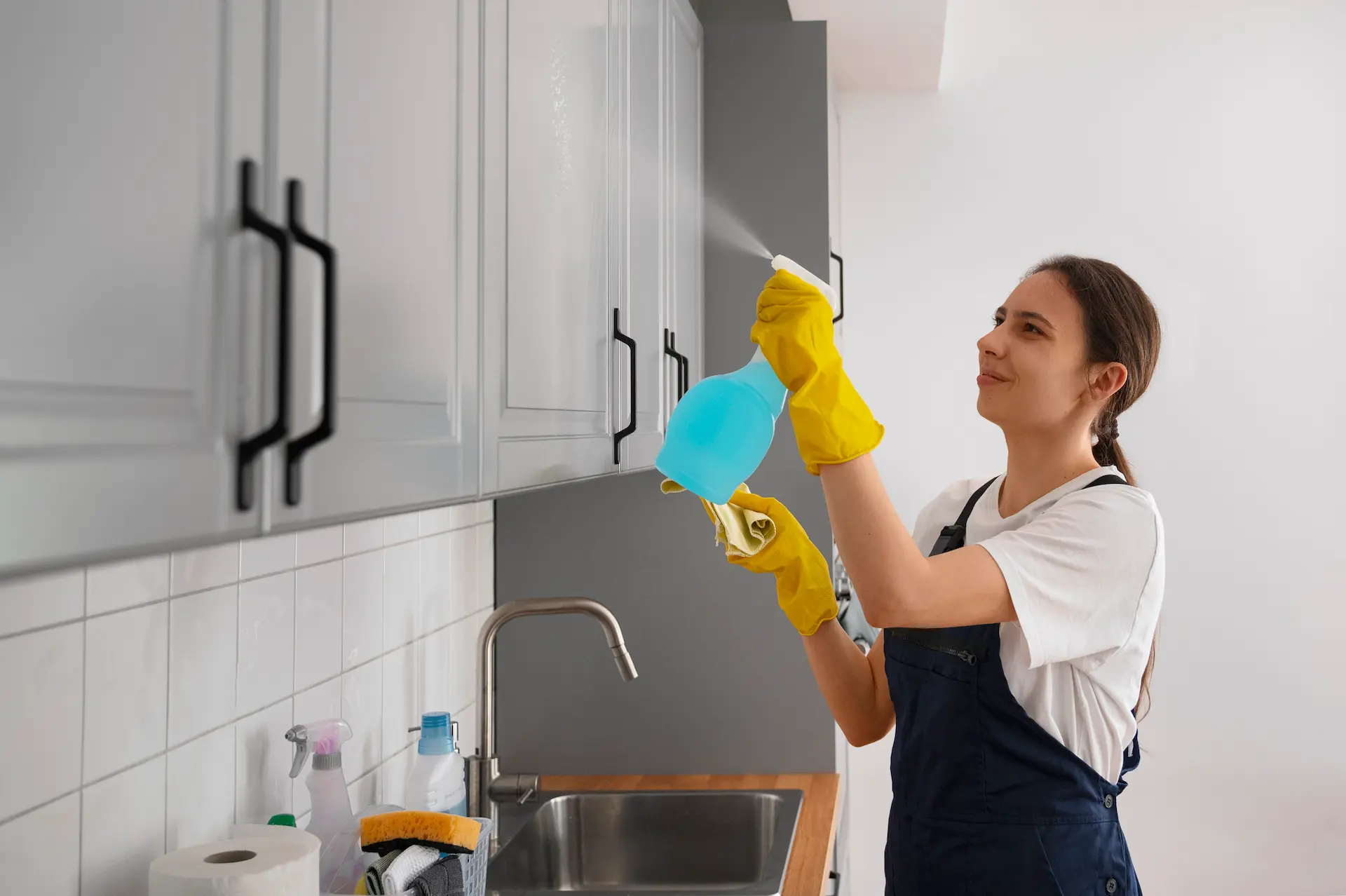
The kitchen is not only the heart of the home, but also one of the areas that requires the most meticulous hygiene. The dirt we encounter here is unlike that found in other rooms; layers of grease combined with cooking vapors and microorganisms that feed on food scraps can seep into every corner of the kitchen. That’s why simply dusting isn’t enough when cleaning the kitchen; a real grease removal and disinfection process is required. Starting by clearing the clutter off the countertop makes it easier to reach every square inch, while giving the dried stains around the stove a few minutes to soften will cut your workload in half.
The exterior surfaces and handles of kitchen cabinets can become breeding grounds for bacteria, as they are the most frequently touched areas throughout the day. When cleaning these surfaces, Parex kitchen cloths and sponges, which do not damage the surface but remove dirt, lift stubborn grease stains from the surface without the need for scrubbing. Especially after cleaning limescale and food residue accumulated in the sink, polishing with a dry cloth restores the kitchen to its original clean appearance. By taking care not to leave heavy chemical residues on food preparation surfaces, your kitchen will not only be clean but also become a safe living space.
After cleaning the grease and grime in the kitchen and creating a fresh, tidy space, we can turn our attention to the wet areas, namely the bathroom, with similar care and attention.
6. Bathroom and Wet Area Cleaning: How to Prevent Limescale and Mold Formation?
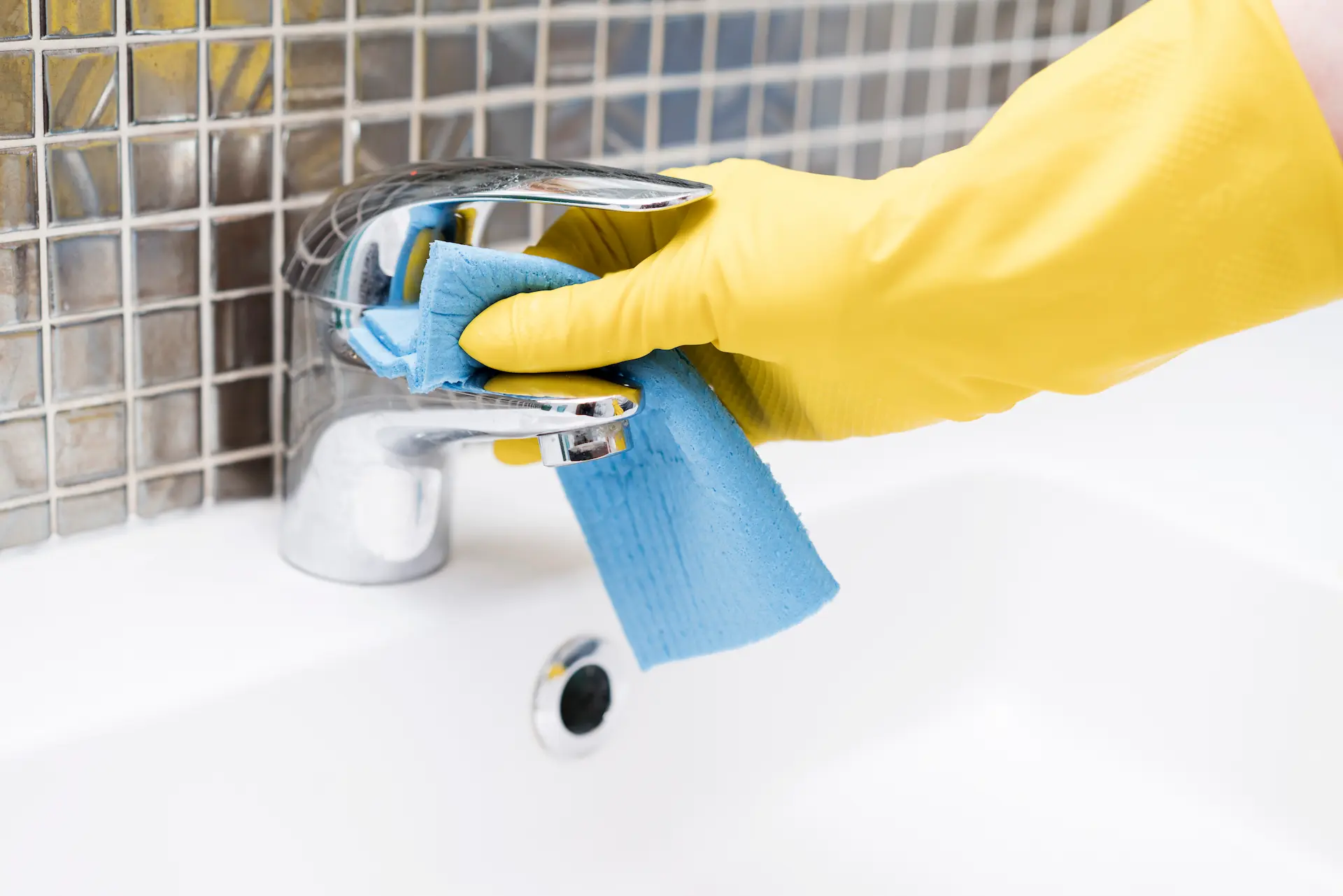
Cleaning the bathroom, the area of the house most exposed to moisture, is not just about polishing surfaces, but also about creating a protective shield against the negative effects of humidity. Water stains and limescale deposits turn into stubborn layers on glass and ceramic surfaces as they dry, while grout lines can darken over time due to moisture. Therefore, when starting cleaning in the bathroom, the most logical step would be to apply a descaling agent to surfaces from shower cabin glass to faucets and allow it some time to dissolve the stains. You can use this waiting time efficiently by cleaning mirrors and cabinet interiors in the meantime.
To maintain the clean and sterile atmosphere of the bathroom, simply cleaning is not enough; keeping surfaces dry is equally important. Wet tiles and sinks are an invitation for bacteria to multiply. This is where Parex microfibre bathroom cloths come in, with their high water absorption power leaving not a single drop on the surface, preventing limescale stains from returning and making fittings shine brightly. By controlling the moisture on the floor and the water vapour on the walls with these special fabrics, you can maintain that desired freshness and true hygiene in your bathroom for a long time.
After removing limescale and moisture from the bathroom and sterilising it, we can focus on cleaning soft fabrics, which are a common hiding place for dust, namely home textiles and upholstery.
7. Home Textiles and Upholstery: What Are the Methods for Removing Allergens?
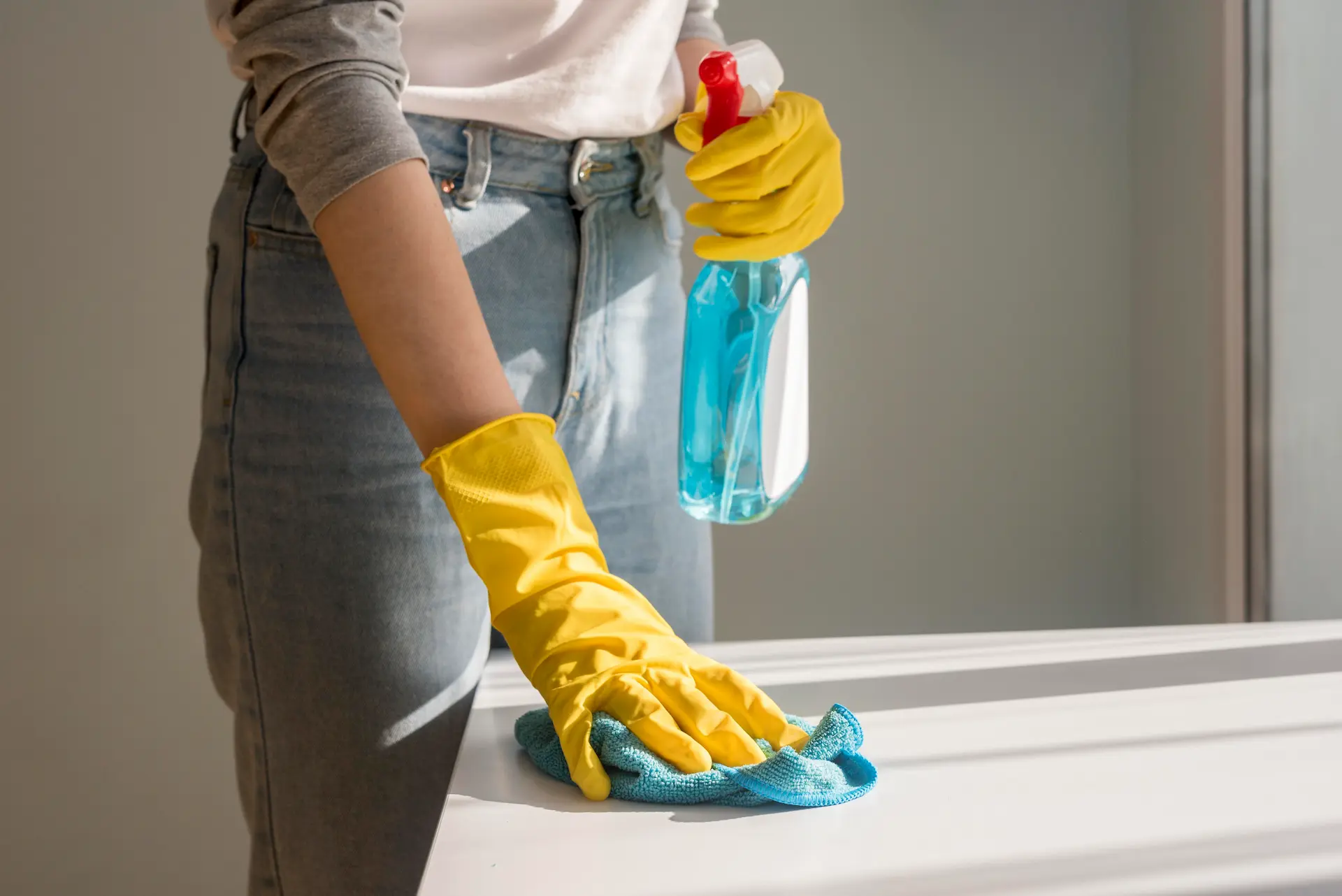
The areas of the home we come into contact with most frequently, yet where dust and allergens hide most deeply, are undoubtedly home textiles and furnishings. Sofas, curtains, and decorative cushions, by their very nature, absorb particles from outside or dust suspended in the air like a sponge. Over time, this accumulation not only makes the air in the home heavier, but can also trigger allergic reactions such as sneezing and itching in sensitive individuals. Therefore, during a deep clean of the home, it is necessary not only to vacuum the upholstery, but also to physically bring the dust embedded in the fibres to the surface.
While powerful vacuuming is essential for collecting dust and hair strands from fabric surfaces, even the most powerful vacuum cleaners can sometimes miss tiny particles that stick to the fabric. At this stage, using the Parex Lint Roller on details such as sofa edges and between cushions allows you to clean those tiny, invisible lint and dust balls in seconds. If you cannot wash your curtains every time you clean, simply wiping them with a microfibre cloth to remove coarse dust will allow the room to breathe. This purification of textiles will completely eliminate that ‘dusty air’ feeling in your home, leaving you with a much fresher living space.
After completely removing all hair and dust from the fabric surfaces, we can proceed to the floor sweeping and vacuuming step to collect all particles that are airborne and have now settled on the floor.
8. Sweeping and Vacuuming Floors: How to Clean Invisible Dust?
After cleaning all the surfaces above, any airborne particles will now have settled completely onto the floor. This is why floor cleaning is the most critical stage, determining the outcome of all your efforts in the home. However, simply giving the floors a cursory sweep with a broom may only displace the dust or cause it to accumulate in corners. For a truly thorough clean, sweeping should be done step by step and without rushing, starting from the farthest corner of the room and working towards the door, including under furniture and along skirting boards.
Changing your sweeping technique according to the type of floor is another key point. While you need to increase the vacuum power on carpets to draw out hidden dirt from deep within the fibres, it is important to use soft heads that will not scratch the surface on parquet and ceramic floors. If you don’t have time to get the vacuum cleaner out or need to quickly pick up small spills, Parex’s mops with high static attraction power allow you to pull dust towards you like a magnet without lifting it into the air. This process prevents the water from becoming muddy during the subsequent wiping stage and ensures a much clearer floor hygiene.
After removing all visible and invisible dust from the floor, we are ready to move on to the deep cleaning stage, which will reinforce the feeling of cleanliness and polish the surfaces.
9. Deep Cleaning of Floors: How to Maintain Shine and Hygiene?
Once the floor has been swept to remove coarse dirt, it is ready to shine and achieve true hygiene. However, the biggest mistake made at this stage is to ‘wash’ the floor by using too much water and detergent. Excess water can seep between floorboards, causing them to swell, or leave unsightly water stains on tiles when it dries. The real secret to mopping floors is to keep the mop at the ideal level of dampness and to frequently replace dirty water. Continuing to mop the house with dirty water does not kill germs; it merely moves them from one room to another.
Choosing a cleaning system that suits the texture of the floor can make this tedious task much more enjoyable. Parex swivel-head mop systems or sets with automatic wringing mechanisms allow you to reach every corner without bending over or straining your back, removing excess water from the mop in seconds and ensuring the surface remains perfectly damp. The microfibre fabric gently lifts even the most stubborn stains from the surface, leaving behind a spotless and quick-drying floor. Seeing the floor regain its natural shine once the cleaning is done is that final touch that will make all your fatigue disappear.
Once the floors have been smoothed and left to dry, we can now focus on air quality, which will refresh the spirit of the home and make this cleanliness permanent.
10. Optimising Air Quality: How to Maintain Freshness After Cleaning?
Now that all surfaces are sparkling and dust has been banished from the house, it’s time to crown your efforts. The freshness you feel when cleaning is complete is not just visual order, but actually the changed air quality in your home. However, closed windows and the odours of cleaning products can make the air feel stuffy after a while. Therefore, as a final touch, opening all the windows in your home to create a natural air flow is essential for removing any remaining particles and refreshing the oxygen.
You can also use natural methods to keep your home feeling clean for longer. Instead of strong synthetic scents, boiling lemon peels or cinnamon sticks in a corner while airing out your home will instantly change its atmosphere. Also, washing and drying your Parex microfibre cloths and mop heads immediately after use prevents unpleasant odours from developing for the next time you use them. By optimising air quality in this way, your home will not only look ‘cleaned,’ but will also become a real home where breathing feels peaceful.
By following these strategic steps, you can transform cleaning from a chore into a systematic celebration of hygiene.
Result
Viewing a deep clean of your home not just as a chore, but as a sign of care for your living space and yourself, makes the process much more meaningful. Thanks to the strategic steps and correct use of equipment shared in this guide, you now have a fresh and peaceful home where you can enjoy every moment, rather than feeling overwhelmed by cleaning. Remember that the easiest way to maintain hygiene is to prevent large accumulations by turning these small routines into daily habits. With Parex‘s practical solutions always by your side, the refreshing effect of cleanliness will stay with you not just for a few hours, but all week long. Now sit back, take a deep breath, and enjoy your spotless home.